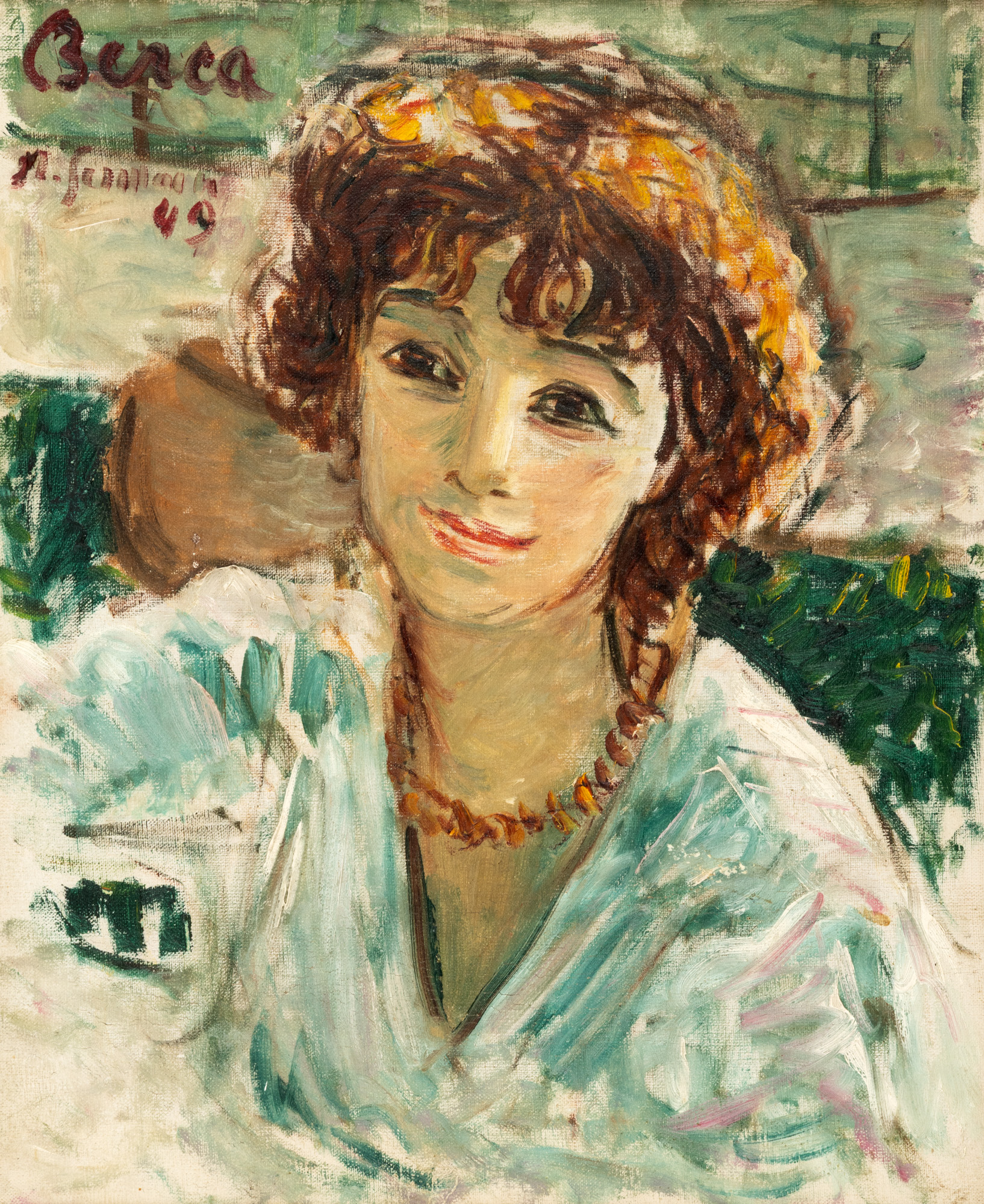

The photos of the lot are informative and indicative, and cannot provide a highly detailed view of the object from all angles. We recommend a careful physical inspection of the lot before bidding.
DRAGUT, Vasile, "Fr. Sirato", State Publishing House for Literature and Art, Bucharest, 1956.
ISPIR, Mihai, "Sirato", Meridians Publishing House, Bucharest, 1979.
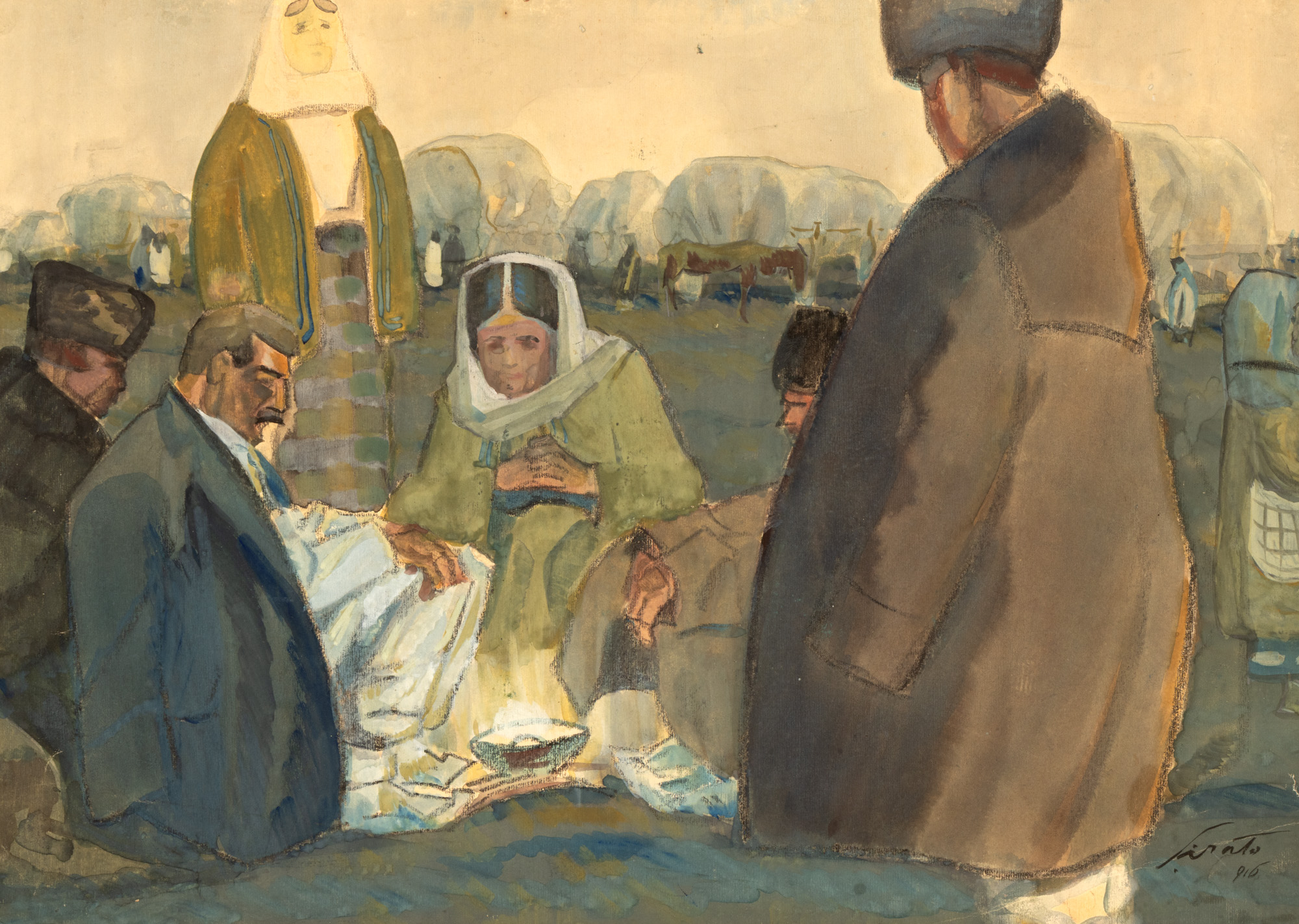
watercolor on paper, 31 x 43 cm, signed and dated lower right, in black, "Șirato, (1)916"
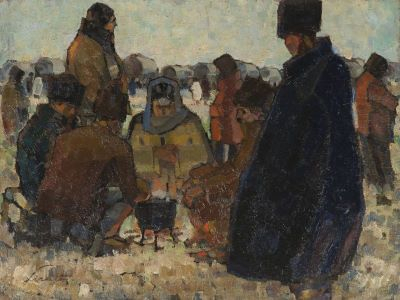
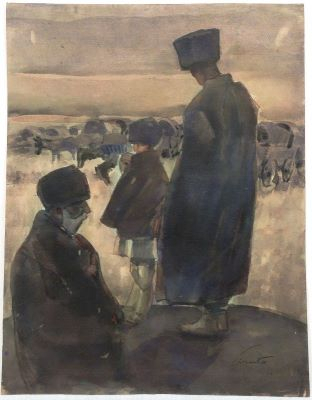
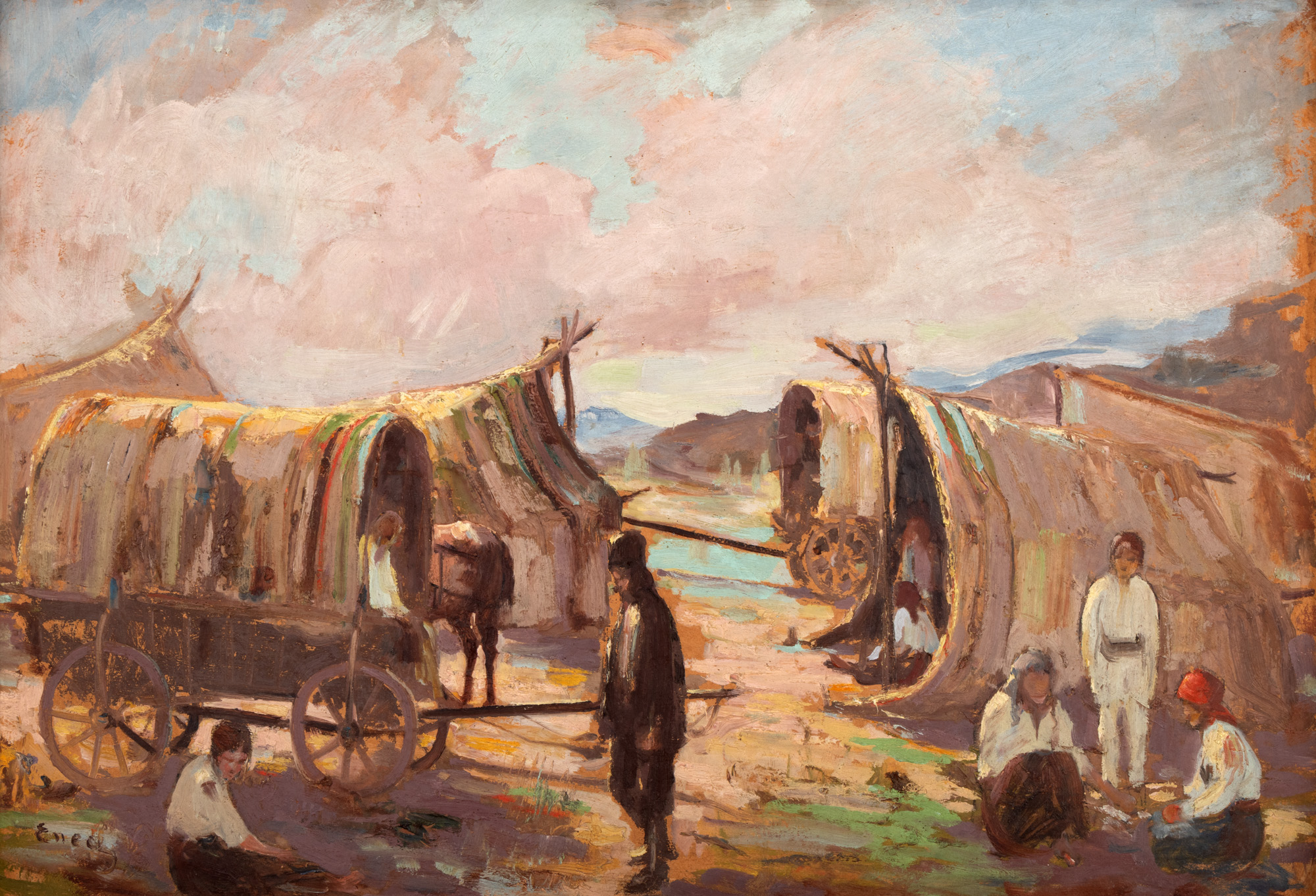
Francisc Șirato's artistic debut is deeply associated with graphic art. In the early decades of the last century, the artist collaborated with contemporary newspapers and created satirical drawings. As a result, he got to know Iosif Iser and Ary Murnu, whose views on art and life he shared. In 1916, against the backdrop of the conflict that had already exploded two years earlier on the global stage, the publications where Francisc Șirato carried out his activities were forced to stop appearing. The artist then ended up overseeing repair works at the municipal Stables, which laid the groundwork for his hard and direct contact with a new reality - that of war. This reality he vividly transposed into sketches and drawings. Șirato dedicated a whole cycle to this motif and titled it "Refuge of the Villages". This work was born under the mark of this theme, in the first year of Romania's participation in the war. A similar work, entitled "Rest", created in oil, is in the collection of the National Museum of Art of Romania. All of the works that were created under the aegis of this motif, in which the artist describes the refuge of villagers from Oltenia and Muntenia towards the Moldova region, feature convoys of carts, workers, caretakers, but also rest scenes charged with anxiety, as we observe in this current work. With their eyes cast down, laden with worry and despair, Șirato's characters are around a pot propped on skids, warming their cold bodies by the fire. In the distance, we discern a panorama of oxen carts, paused for a moment's respite. The monumental silhouettes, frozen in the seal of time are marked by large spots of wash and cold tones, blue-gray or yellow-ocher. The sober palette supports the contrast of the shapes, which seem to be arranged according to the brightness of the space. A passive observer, the artist approaches from both a social and psychological perspective, both the isolated character and larger groups of people. 1921, the year of Francisc Șirato's first solo exhibition, brought together a series of watercolours and oils capturing the tumult of desperate war days. It is very likely, therefore, that the present work, created in 1916, was a part of the aforementioned exhibition.
For clarifications regarding the bidding procedure, hammer price costs, guarantee, payment, and collection terms for the winning lot, we recommend carefully reading/re-reading the Bidding Regulations.
For additional information regarding the lot and the auction, please contact the Art Consultants Department.
By choosing "Accept all cookies" you agree to the use of cookies to help us provide you with a better user experience and to analyse website usage. By clicking "Adjust your preferences" you can choose which cookies to allow. Only the essential cookies are necessary for the proper functioning of our website and cannot be refused
Cookie settings
Our website stores four types of cookies. At any time you can choose which cookies you accept and which you refuse. You can read more about what cookies are and what types of cookies we store in our Confidentiality Policy.
are necessary for technical reasons. Without them, this website may not function properly.
are necessary for specific functionality on the website. Without them, some features may be disabled.
allow us to analyse website use and to improve the visitor's experience.
allow us to personalise your experience and to send you relevant content and offers, on this website and other websites.