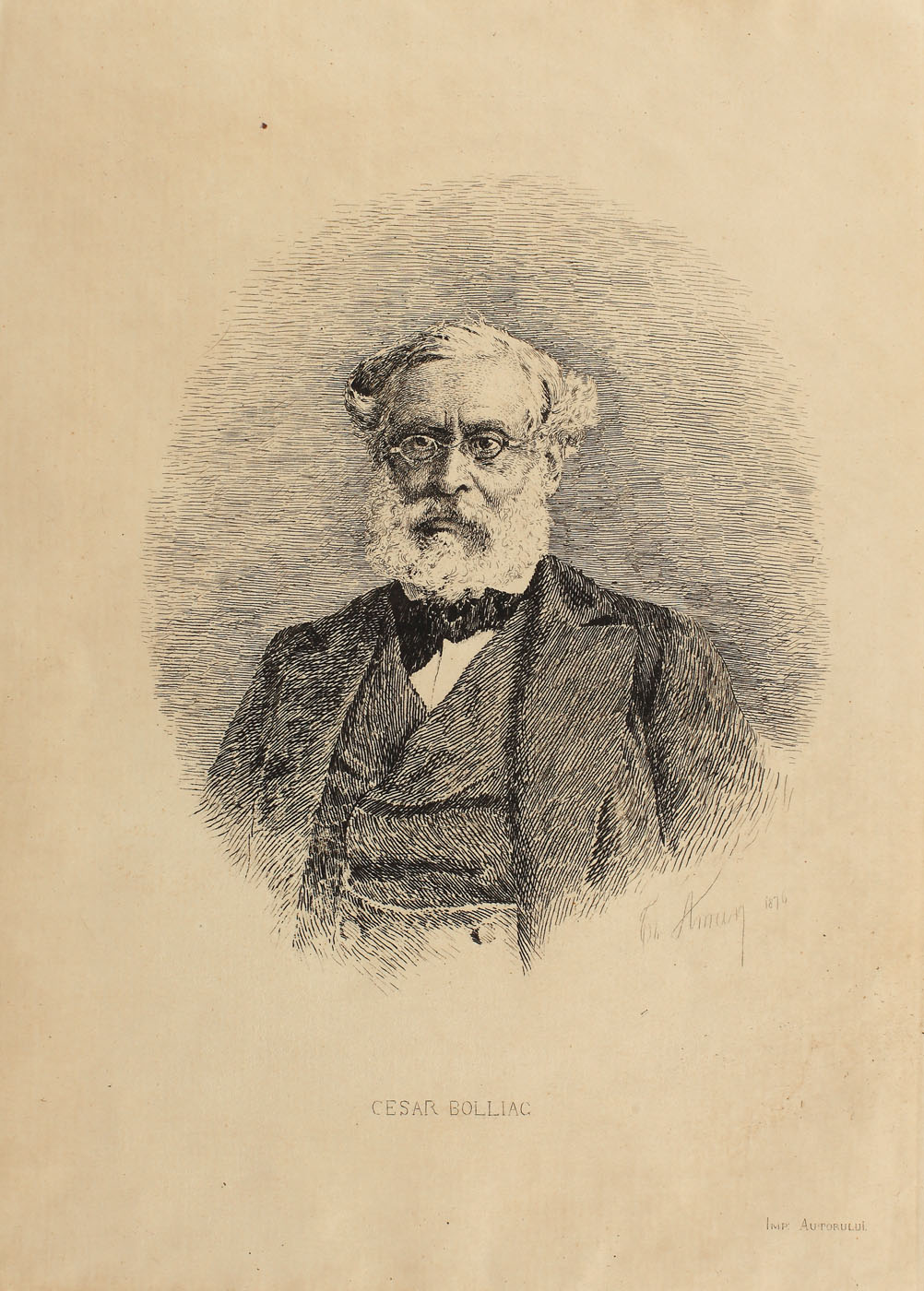

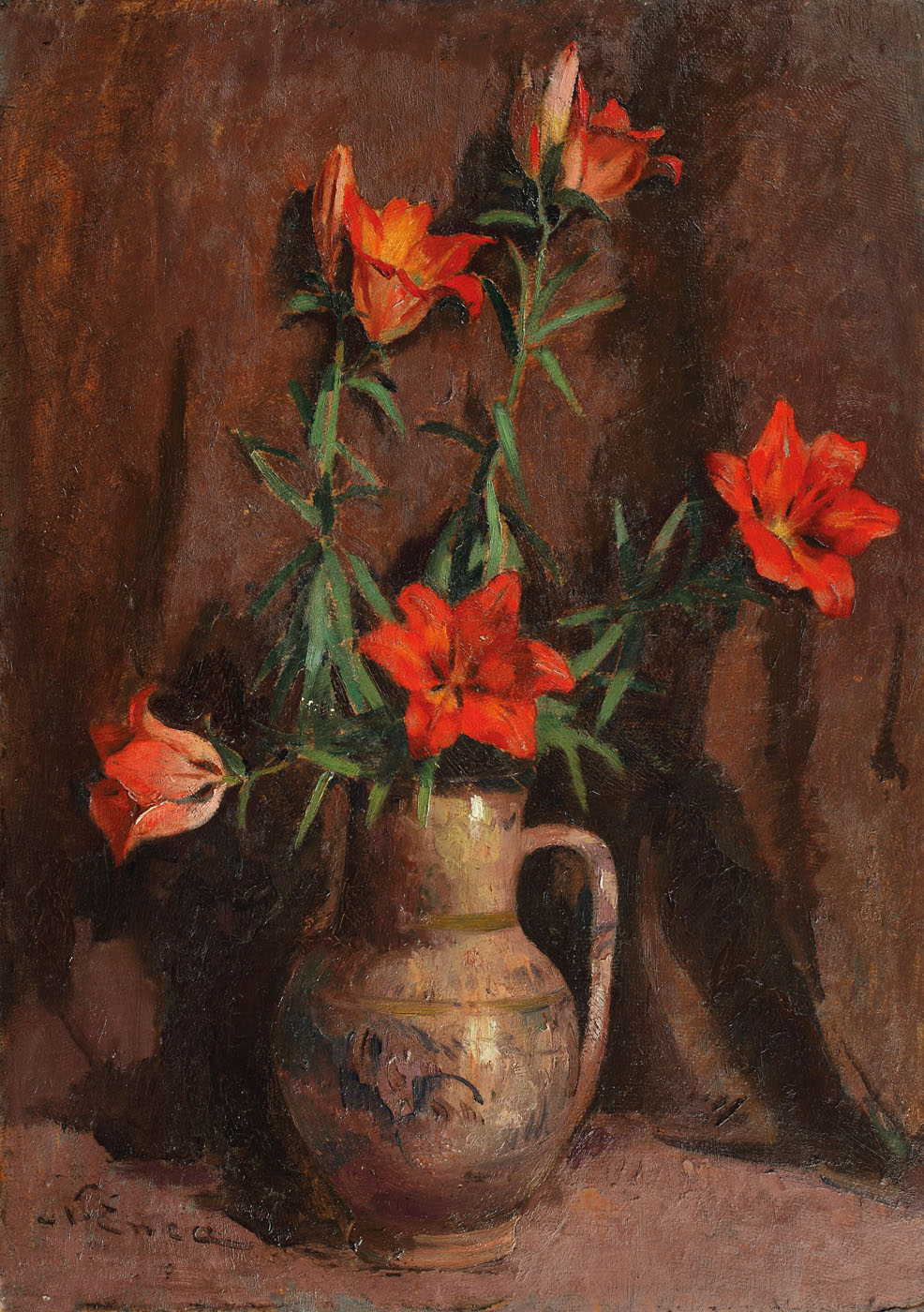
The photos of the lot are informative and indicative, and cannot provide a highly detailed view of the object from all angles. We recommend a careful physical inspection of the lot before bidding.
BREZIANU, Barbu,"Nicolae Tonitza", Ed. Arta Grafică, București, 1967 BREZIANU, Barbu, "Nicoale Tonitza", Ed. Meridiane, București, 1986 CIUCĂ, Valentin, "Pe urmele lui Nicolae Tonitza", Ed. Sport-Turism, București, 1984 COMARNESCU, Petru,"N.N.Tonitza", Ed. Tineretului, București, 1962
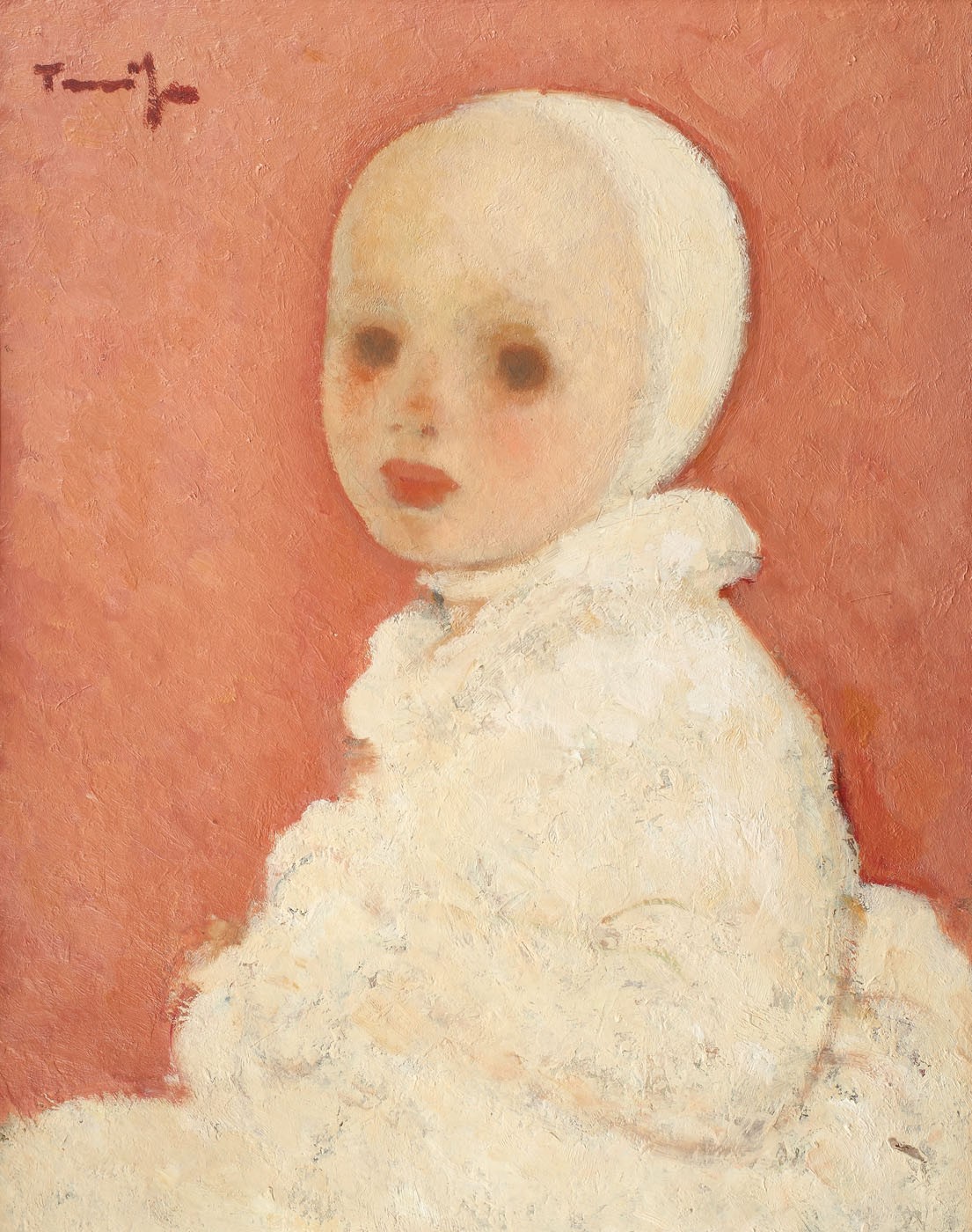
oil on cardboard, 50 x 40 cm, 40x50, signed upper left "Tonitza", in brown
Research information
Opera a participat la expoziția Nicolae Tonitza, Muzeul de Artă al R.P.R, 1964 și este reprodusă în catalogul expoziției la cat.144, pag. 96. Opera a participat la expoziția Nicolae Tonitza, Muzeul de Artă al R.S.R, 1979.
PROVENANCE
the historic collection of the Bușulenga family. The work initially belonged to Cezar Bușulenga, one of the siblings of Apostol Bușulenga, husband of Zoe Dumitrescu-Bușulenga. After 1977, the painting entered the collection of Nicolae Bușulenga, the third Bușulenga brother.
"Children (…) appear with their charming lack of experience, with their harmonious mess, with their winged lack of discipline, with their fright of everything that is imposed on them by tradition and authority and with their passion for everything light, for everything free movement, grace and play, for everything joy of life, for everything unconditional brotherhood, with their planetary peers under the equally blessing kiss of a sun that many of them may soon not be able to see anymore...
In my countless and carefully long forays into the wonderful world of children, I met hungry children in rags, children whose bodies suffered, but whose fresh, clear soul reflected, like a pure and transparent mountain spring, the high beauty of the sky. I met children in expensive rags, children fed with wealth and refinement, children encouraged by permanent attention and caresses, children who were perfectly healthy, but in whose souls, prematurely grievous, grew stifled pains and frightening agonies." (1931) (Tonitza, Scrieri despre artă)
Defined and identified with the phrase "the children's painter" - like all great creators that stand out with a certain element that gives them uniqueness, singularity - Nicolae Tonitza occupies an important place in the pantheon of universal values. Part of the realist type of art, deeply prone to introspection, a continuator of the lyrical, suave vision of his predecessors - Grigorescu but particularly Luchian - Tonitza managed to enrich our art with works in which he mirrored the reality of his time, with immeasurable force.
In the creation of Tonitza, the theme of the child and of childhood in general occupied a prominent place, almost becoming a symbol. The theme troubles him, concerns him, moves him, and he seeks like no other those specific notes of childhood, with the little ones' purity, naiveté and disorientation before the problems of life. The sense of paternal emotion will be the origin of numerous works of art that had the power to reveal the painter's artistic personality, occasioning him the experience of almost musical relations at a chromatic level. With his specific sincerity and modesty, Tonitza stated that all he did was paint his own children "from the cradle, from their first explorations of the ground, from the sparks of their eyes, I believe - he said - that all I showed on canvas was the emotion of a father..."
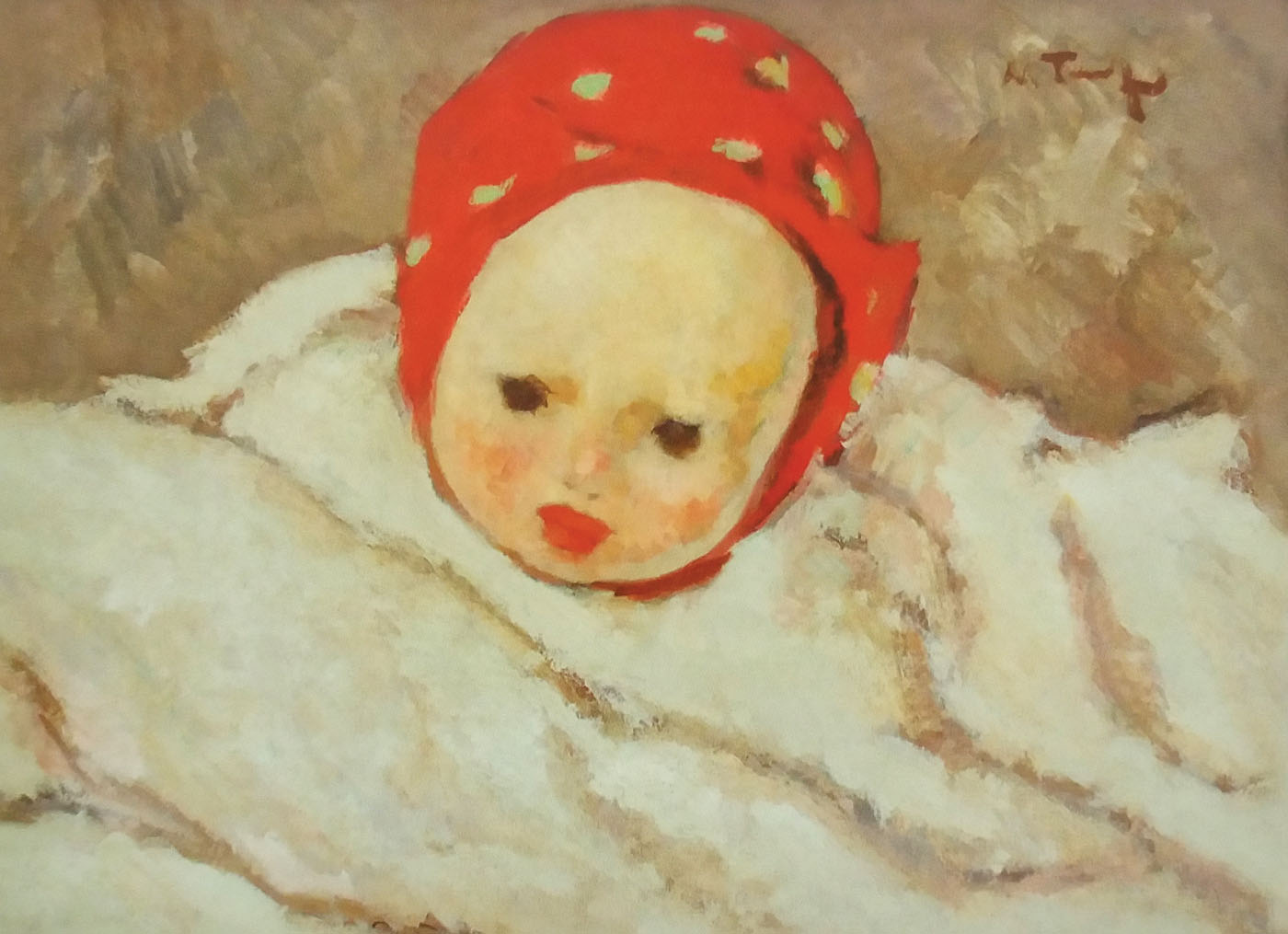
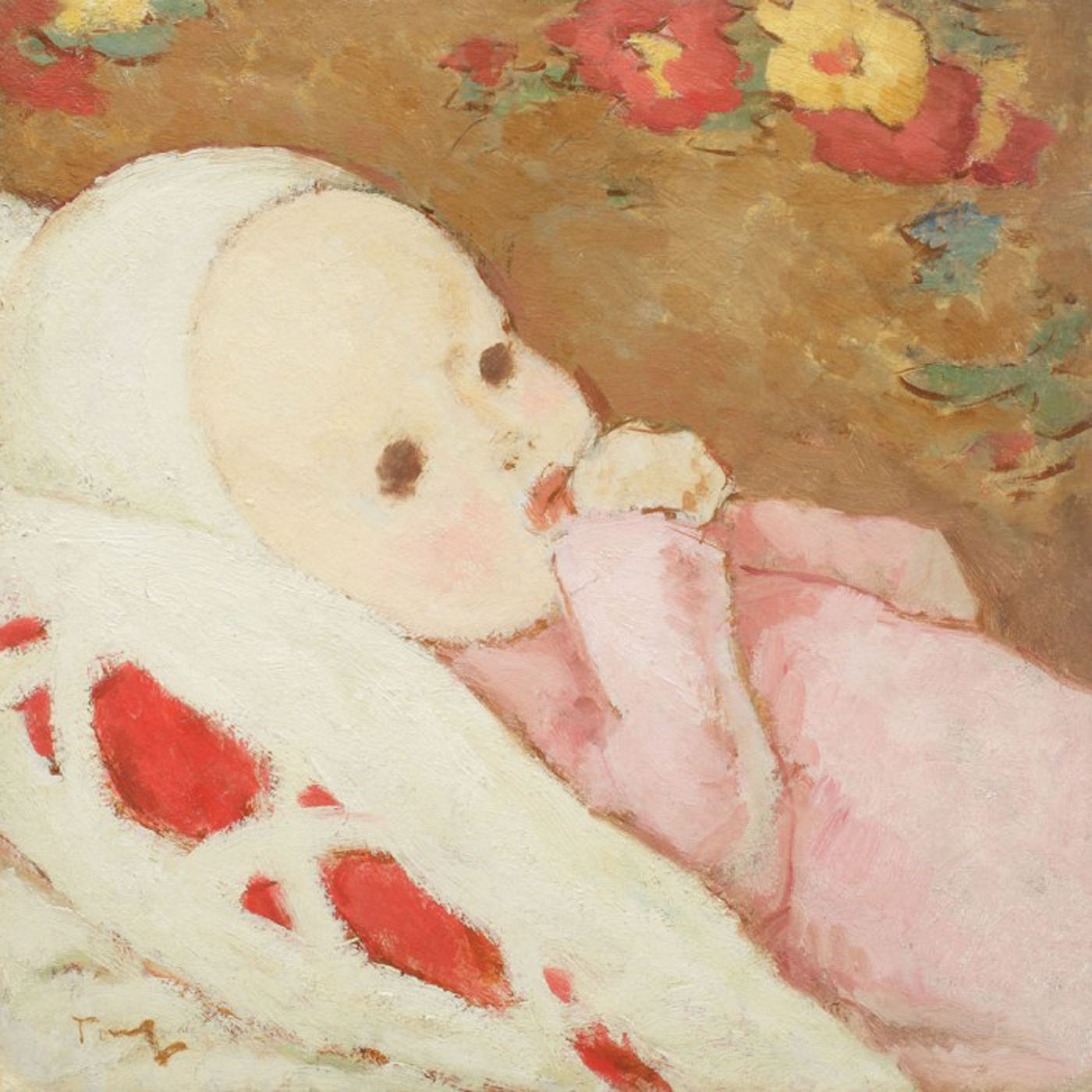
Catrina (b. 1914), Petru (b. 1915), Irina (b. 1917) and Silică (the infant who died while stayed in Vălenii de Munte), as well as Nineta Gusti (the artist's niece) configured to a great extent the creation of Nicolae Tonitza, dedicated to the age of innocence. All five children appear on the artist's canvases, in various stances and significances. With his spirit of a fine observer, Tonitza the father watches them playing, sleeping, crying, listens to their cries and analyses their movements and their gestures, watches their expressions every single moment. Sometimes the children pose to the artist without knowing it, sometimes they have to wait for hours on end, listening meekly to the father's indications. For a major pictorial effect, the artist puts headscarves or hats on their heads, ties brightly coloured scarves around their necks, or places them in front of vividly coloured carpet, dressed plainly, in white shirts and barefoot.
For clarifications regarding the bidding procedure, hammer price costs, guarantee, payment, and collection terms for the winning lot, we recommend carefully reading/re-reading the Bidding Regulations.
For additional information regarding the lot and the auction, please contact the Art Consultants Department.
By choosing "Accept all cookies" you agree to the use of cookies to help us provide you with a better user experience and to analyse website usage. By clicking "Adjust your preferences" you can choose which cookies to allow. Only the essential cookies are necessary for the proper functioning of our website and cannot be refused
Cookie settings
Our website stores four types of cookies. At any time you can choose which cookies you accept and which you refuse. You can read more about what cookies are and what types of cookies we store in our Confidentiality Policy.
are necessary for technical reasons. Without them, this website may not function properly.
are necessary for specific functionality on the website. Without them, some features may be disabled.
allow us to analyse website use and to improve the visitor's experience.
allow us to personalise your experience and to send you relevant content and offers, on this website and other websites.